

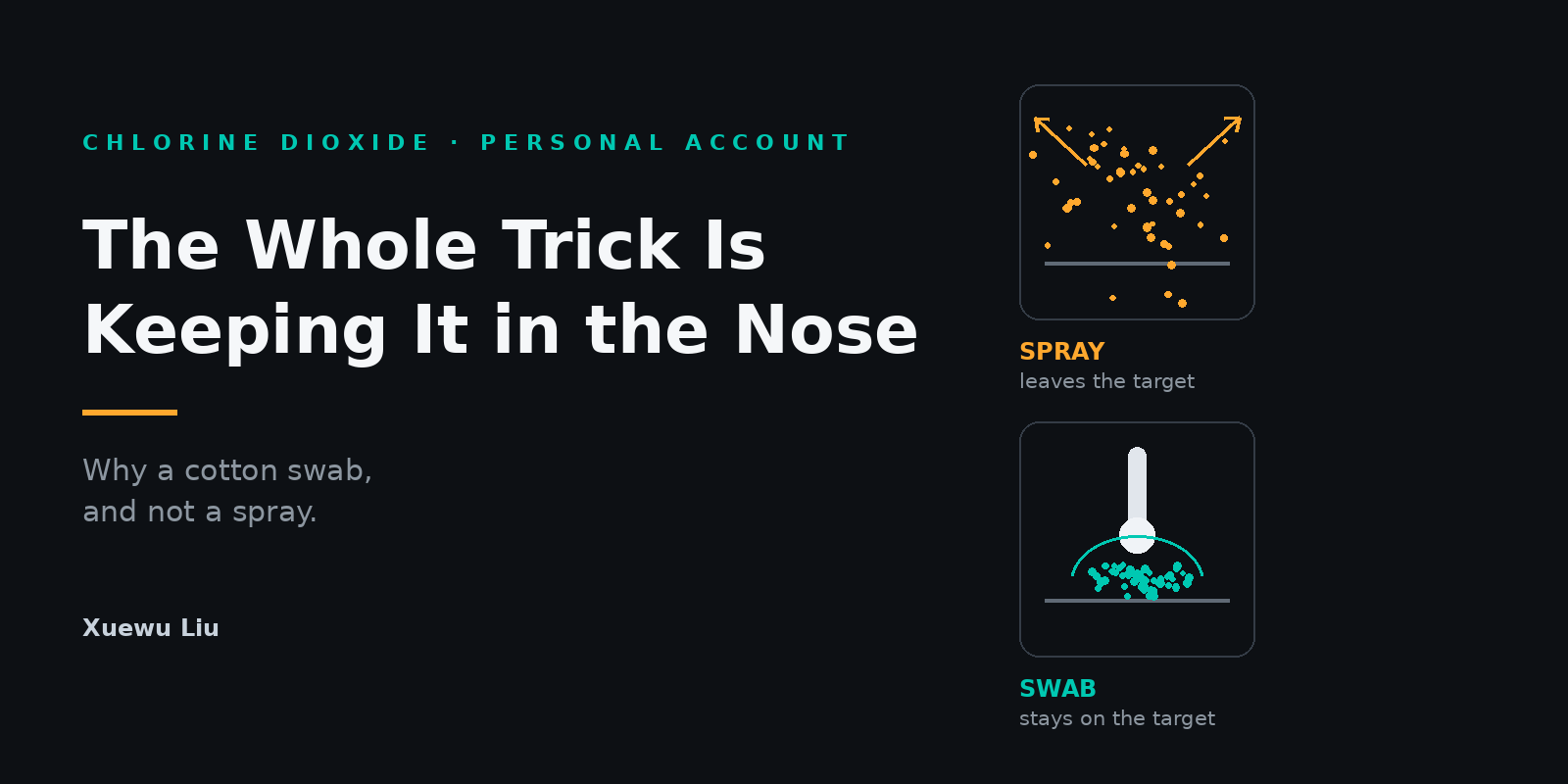
I have written before about what I do when my rhinitis flares. Today my wife tried it for the first time, and the result was close enough to mine that it is worth setting down properly — including the part I actually care about, which is why a cotton swab and not a spray.
What happened
My own version, over several years:
When a flare starts — the itch deep in the nose, running mucus, sneezing I cannot stop — I soak a large cotton swab in a chlorine dioxide solution of roughly 3,000 ppm, with nothing else in it. I insert it into one nostril and leave it there for one to two minutes. Then the other nostril. Then, if needed, one more round on each side.
The itching stops almost immediately. There is a real stinging sensation while the swab is in place. Ten to twenty minutes later the stinging is gone and the itch has not come back.
Today my wife’s flare was a bad one: heavy mucus, intense itching, continuous sneezing.
I made the solution the same way. The stock was a CDS solution under 20,000 ppm, diluted roughly five-fold.
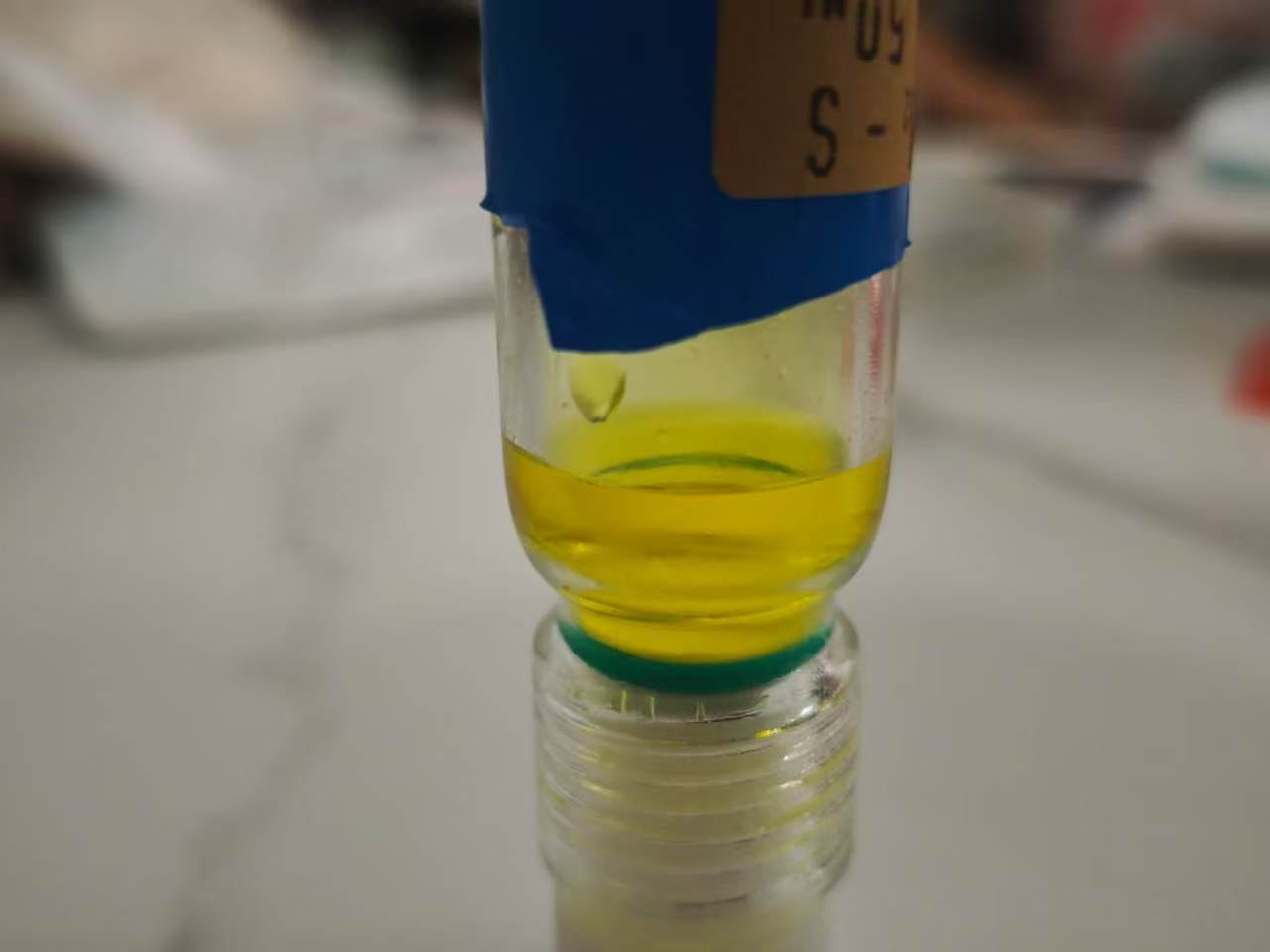
[PHOTO 1 — stock CDS bottle]
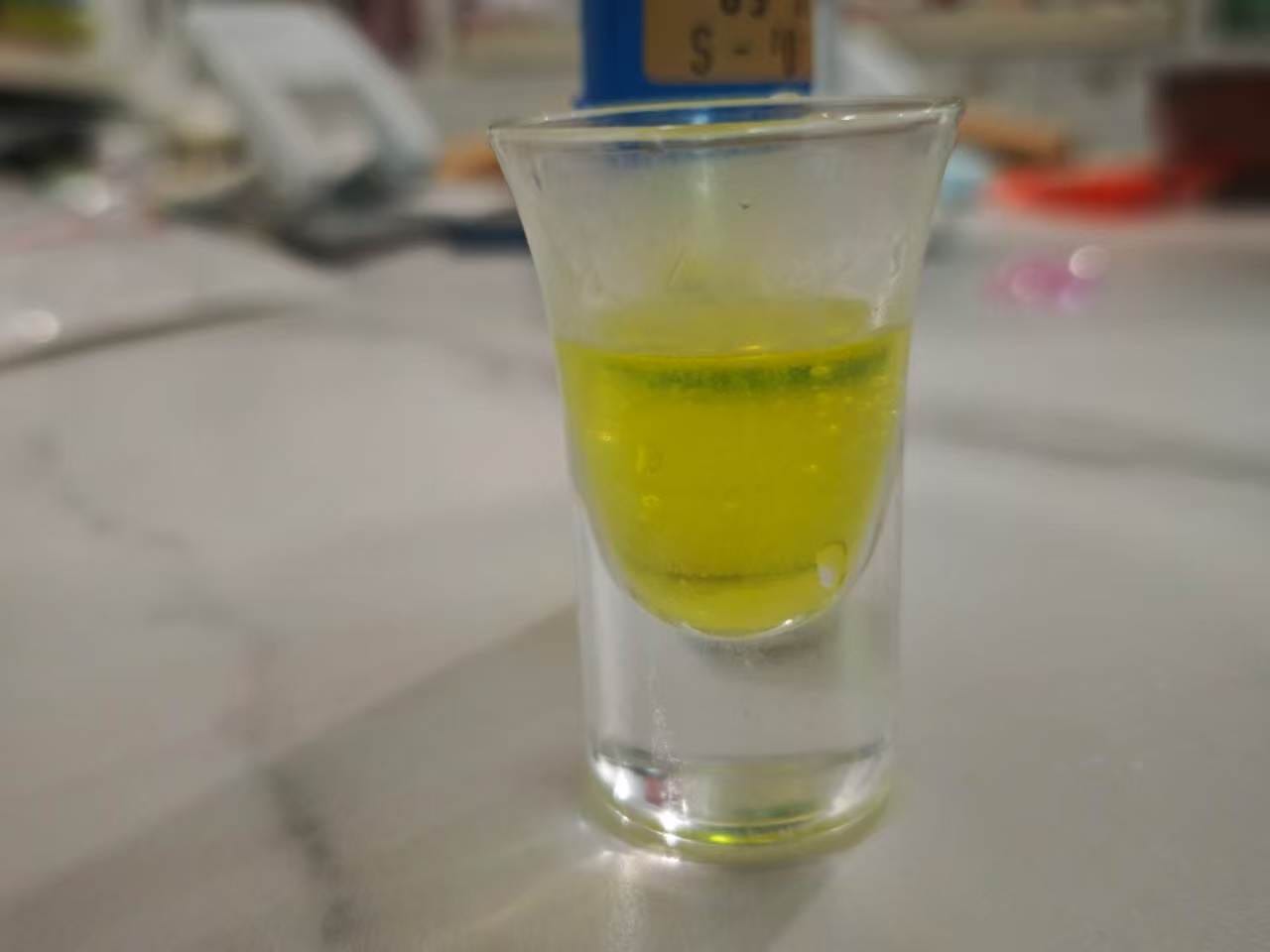
[PHOTO 2 — the diluted solution]
Then the swab, soaked, into one nostril.
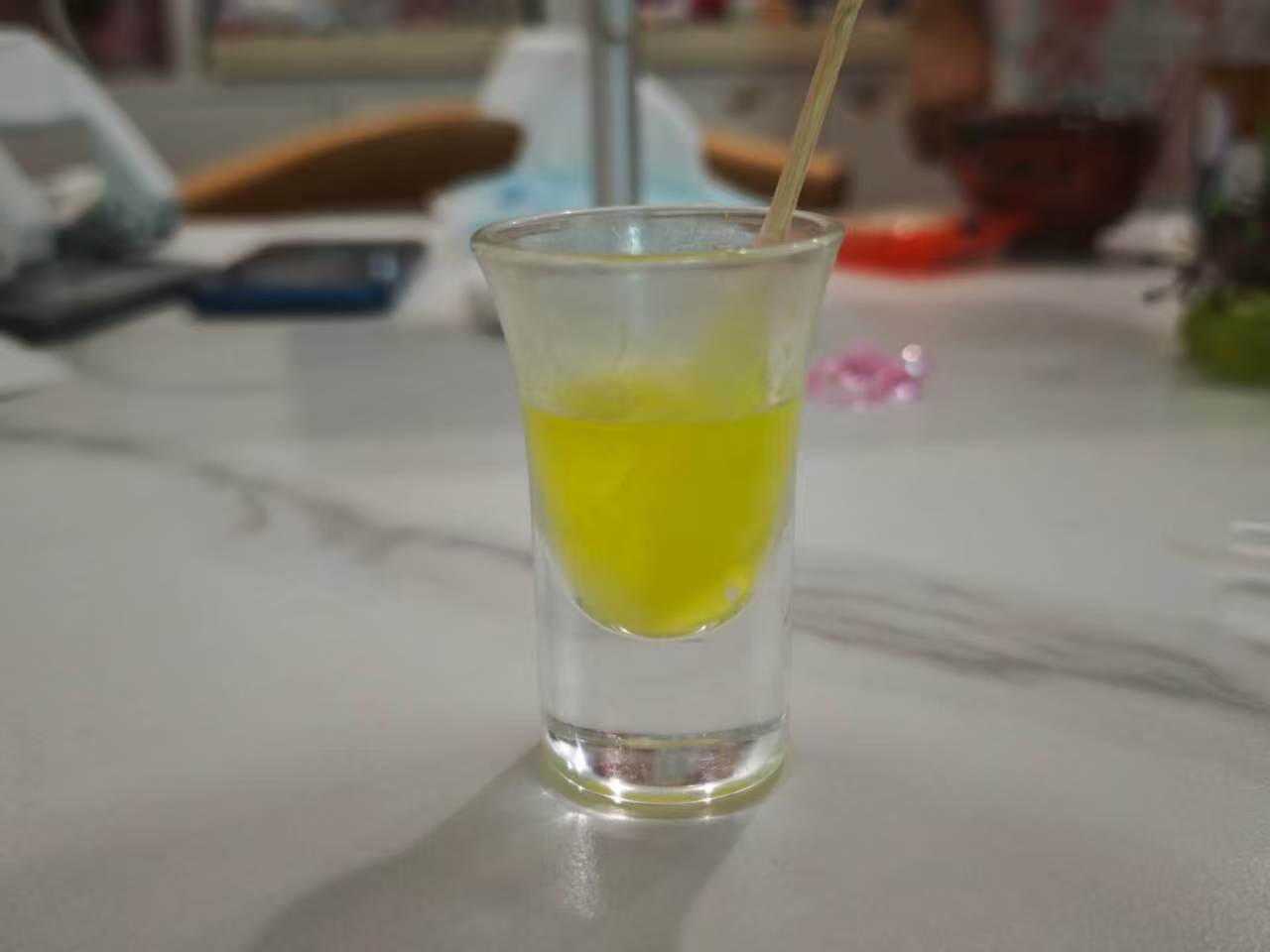
[PHOTO 3 — large cotton swab soaked in the diluted solution]
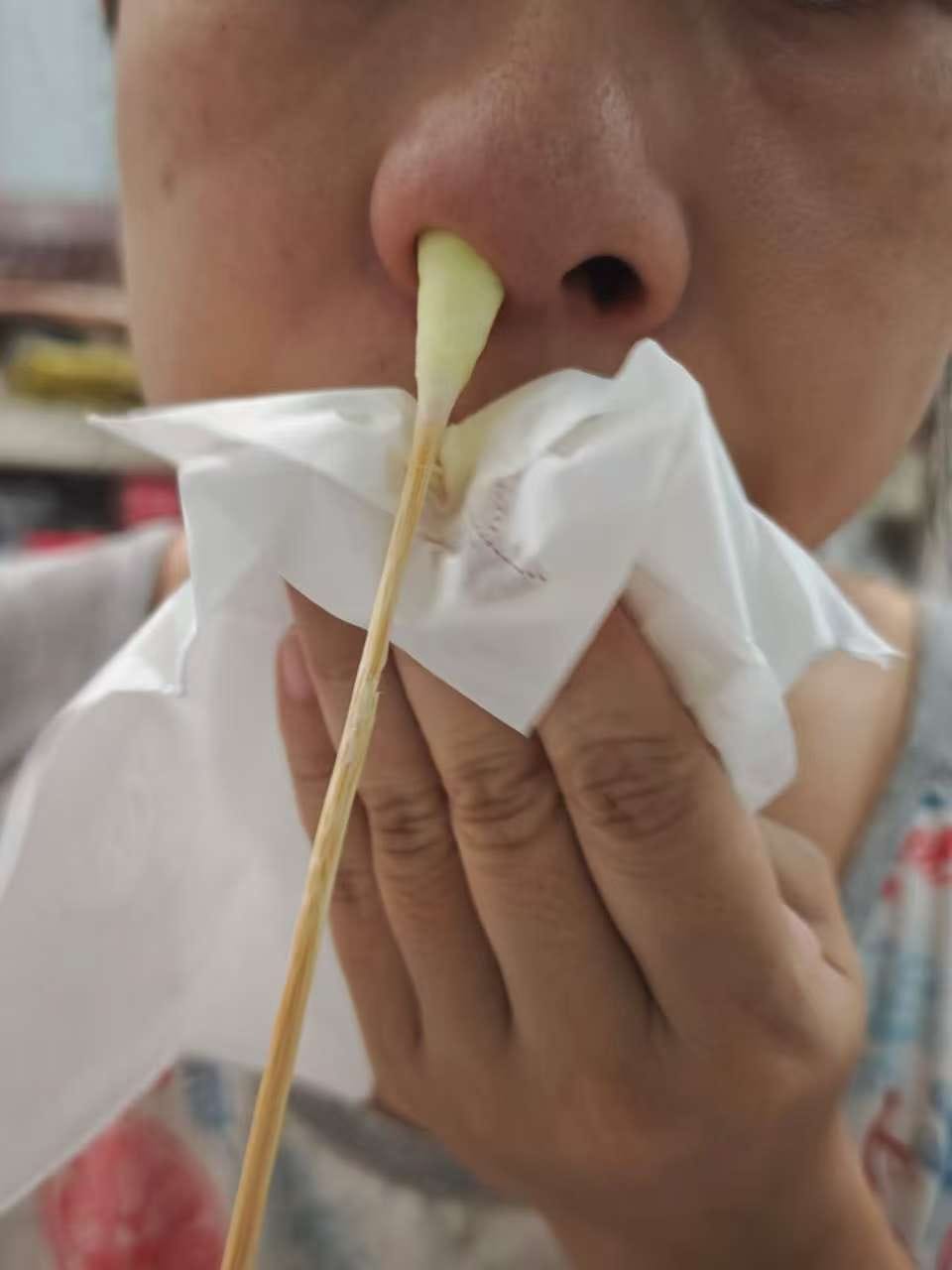
[PHOTO 4 — swab placed in the nostril]
One to two minutes per nostril, one to two rounds. Her description matched mine: the itch went almost at once, there was clear stinging during contact, and things had settled within about fifteen minutes.
Two people, both of whom knew what was being applied and expected it to work, in a condition that comes and goes on its own. That is exactly what this is.
About the number
I have been writing “about 3,000 ppm,” and I should be precise about how soft that figure is.
Three thousand ppm is simply the concentration in common use — it is the number people in this space have converged on, and I diluted toward it because that is the reference point, not because I established it. I did not measure the final solution. A stock label and a five-fold dilution are the entire basis of the estimate, and the true value could sit meaningfully to either side of it.
What I can say from repetition rather than measurement: the more concentrated it is, the sharper the sting, and the more definite the relief.
Why a swab
This is the part that is a design decision rather than a folk remedy.
Chlorine dioxide is a dissolved gas. Spray it into a nostril, or irrigate with it, and a large fraction of it leaves the site — down the throat, into the airway, wherever the airflow carries it. That fraction does nothing for the inflamed tissue you were aiming at. It is simply gone, acting somewhere you did not choose.
A soaked swab holds the solution against the mucosa where the flare actually is, holds it there for a time you decide, and stops when you take it out. The contact is local and bounded.
This is the same principle my clinical work runs on. In intratumoral chlorine dioxide ablation, the entire technical problem is containment — imaging confirms the agent stays inside the target and does not track out along planes of least resistance. An oxidant that leaves its target has stopped being a treatment and become an exposure. The nose is a crude version of the same constraint, solved with a cotton swab instead of an ultrasound probe.
The material matters on the same logic. What I use is chlorine dioxide gas dissolved in water, with nothing else present. An activated sodium-chlorite-plus-acid preparation is not the same substance: activation is incomplete, and what remains in the bottle includes residual chlorite and the salts of whatever acid was used. If the whole point is controlling exactly what touches the tissue and for how long, starting from an uncharacterized mixture defeats the design before you begin.
Why I think it works
Three tiers, in descending order of how much weight I put on them.
Observed. In fifteen years of intratumoral work, the necrosis chlorine dioxide produces is not accompanied by the inflammatory response the extent of tissue destruction would predict. That is a repeated observation in a setting where I control delivery. I have not excluded alternative explanations — devascularization, observer bias — and I have said so before. I have also used chlorine dioxide on my own arthritic joint, at higher concentration, and the arthritis resolved; I am giving no detail on that here.
Reasonable mechanistic inference. Rhinitis is an inflammatory process in tissue you can physically reach. If chlorine dioxide has a local anti-inflammatory effect at all, a nasal flare is close to the ideal case for showing it: shallow, accessible, and symptomatic within minutes, so the timescale of any effect is observable rather than inferred.
Speculation, and nothing more. My guess at the mechanism is redox signaling. Chlorine dioxide inside tissue behaves chemically somewhat like the reactive oxygen species the immune system deploys itself. The quantity of oxidant needed to perturb a signaling pathway is orders of magnitude smaller than the quantity needed to destroy tissue. So it is at least coherent that a brief local oxidant burst reads, to the surrounding immune machinery, as evidence that the clearing job has already been done and the inflammatory program does not need to start.
I have no data for that. It is a hypothesis I find attractive, which is the kind of hypothesis a person should distrust in himself.
If you have tried something similar — or tried it and found nothing — I would like to hear about it.
Liu, Excellent use. I know nebulizaton CDS + saline use, but this way is easy, very practical, thanks for sharing .
I don’t think nebulization itself would make a meaningful difference in that respect. In other words, I would not expect chlorine dioxide to lose its effect simply because it is nebulized. From that standpoint, drops and nebulization should not be fundamentally different.