
Why Chlorine Dioxide Demonstrates Hemostatic Effects — And Why This Matters for Intratumoral Therapy
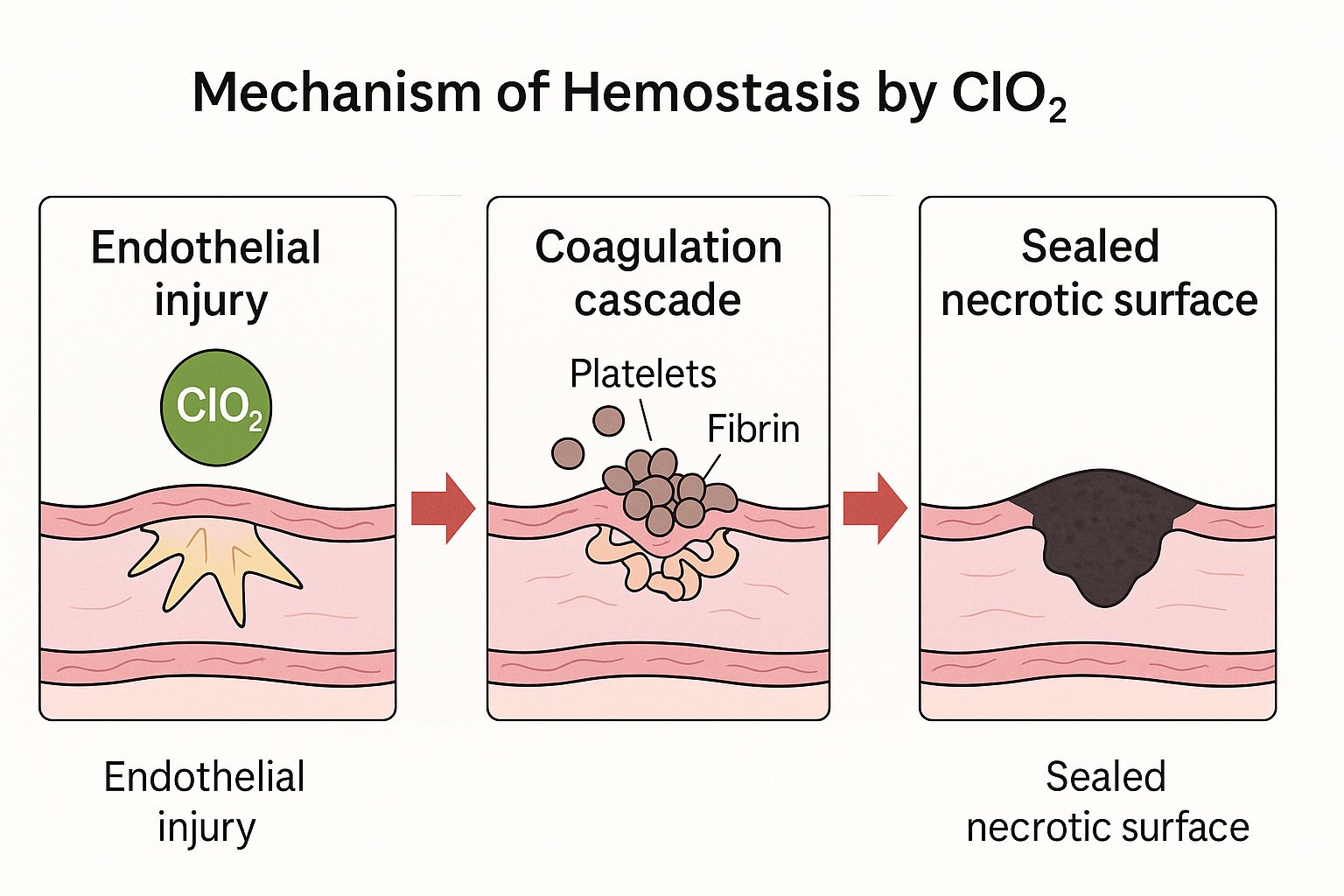
The Oxidative Basis of Hemostasis: Why ClO₂ Seals Tumor Vessels Instantly

Introduction
In our clinical practice, we have consistently observed that chlorine dioxide (ClO₂) exhibits a remarkable hemostatic effect. When ClO₂ solution is applied to an open wound, the blood rapidly darkens, and bleeding ceases almost immediately. In intratumoral injections, exposed tumors likewise turn black at the surface, indicating coagulative necrosis, but without the expected ulceration or persistent bleeding.
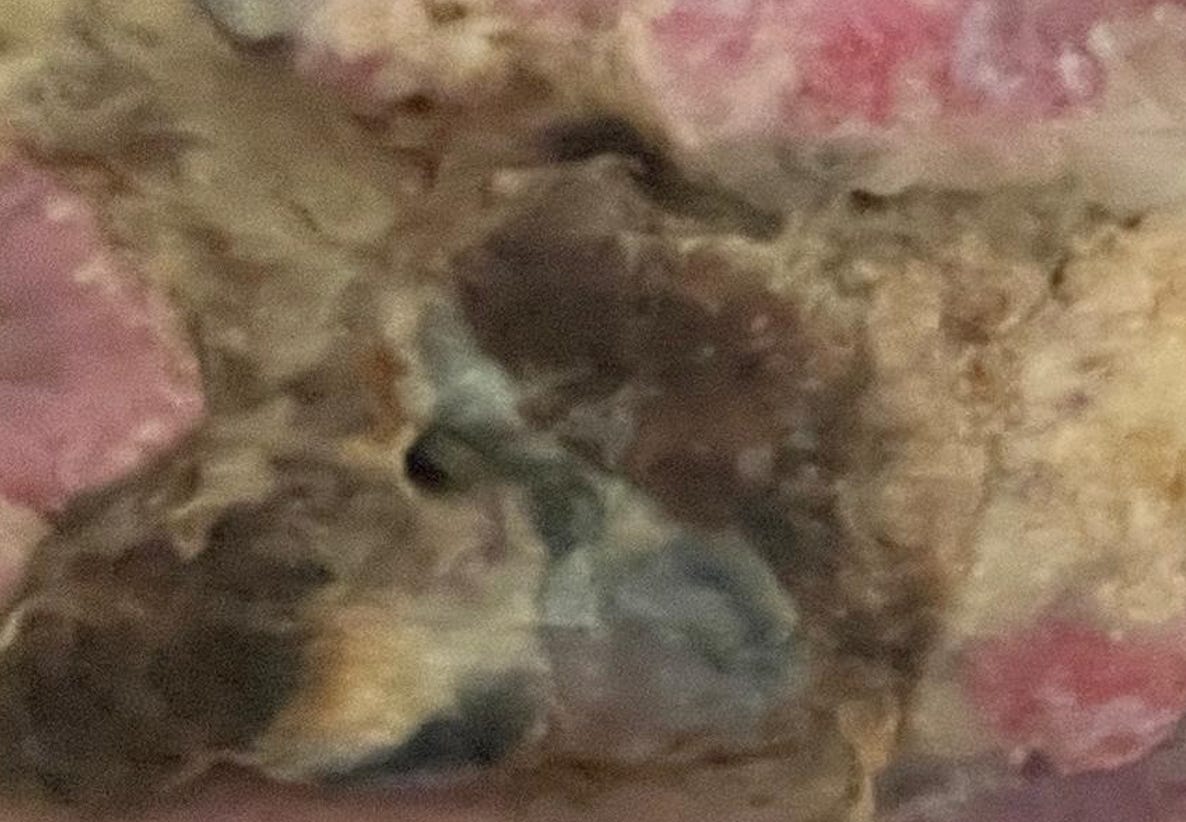
Figure 1. Human breast tumor after intratumoral chlorine dioxide (ClO₂) injection.The surface of the tumor shows clear blackened coagulative necrosis. Importantly, despite the extensive tissue destruction, there is no evidence of bleeding. Instead, a stable necrotic layer seals the lesion, reflecting ClO₂’s dual action: tumor killing and rapid hemostasis. This phenomenon has been repeatedly observed in exposed tumors, where bleeding risk would normally be expected but was instead absent after ClO₂ injection.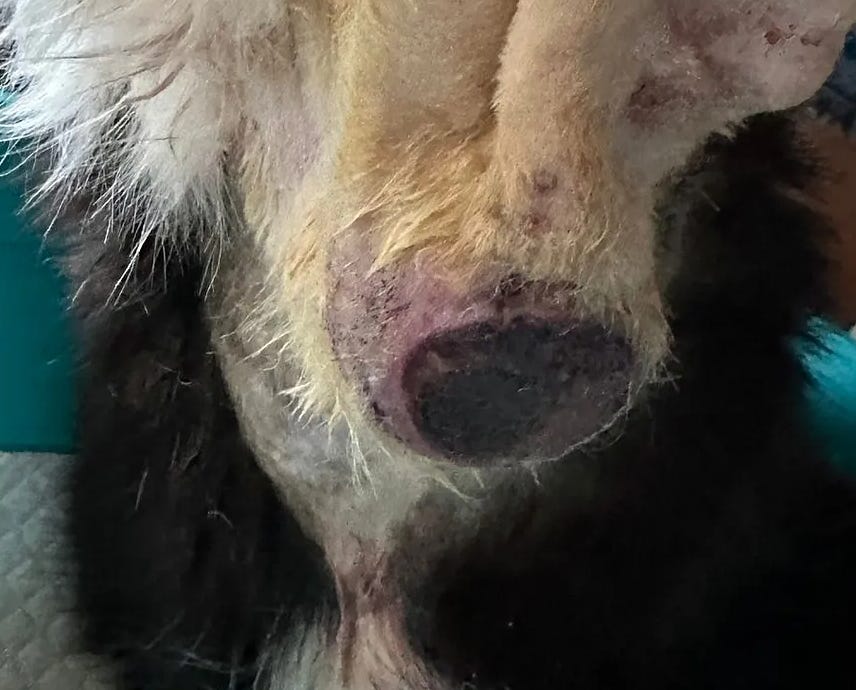
Figure 2. Feline tumor at 7 days after intratumoral chlorine dioxide (ClO₂) injection.The lesion is covered by a dark necrotic cap, sharply demarcated from surrounding viable tissue. Even though the tumor was externally exposed, there is no evidence of bleeding or ulcerative discharge. Instead, the blackened surface reflects oxidative coagulative necrosis and vessel sealing, consistent with the hemostatic effect observed in both human and veterinary cases. This further supports that ClO₂ simultaneously induces tumor necrosis and prevents hemorrhage, providing a safe therapeutic window for intratumoral treatment.In fact, in our documented clinical case reports, whenever tumors were exposed externally, a blackened, sealed surface appeared consistently. This phenomenon suggests that ClO₂ is not only a potent antitumor agent, but also a chemical cauterizer, simultaneously destroying tumor tissue and closing off bleeding points.
This article will first analyze the mechanisms that explain ClO₂’s hemostatic effects, supported by vascular biology literature, and then discuss why this property has profound clinical value for intratumoral cancer therapy.
Keep reading with a 7-day free trial
Subscribe to Xuewu Liu’s Substack to keep reading this post and get 7 days of free access to the full post archives.